CONTEMPLATORS · ABOUT
CONTEMPLATORS · ABOUT
CONTEMPLATORS · ABOUT
A collection about the art of pausing
A collection about the art of pausing
A collection about the art of pausing
The Contemplators capture that instant when attention is focused and everything else disappears.
The Contemplators capture that instant when attention is focused and everything else disappears.
The Contemplators capture that instant when attention is focused and everything else disappears.

Contemplators
Contemplators
Manifesto.
Manifesto.
Manifesto.
I. We are scrollers. We seek to search.
I. We are scrollers. We seek to search.
II. We inspire, they execute. It is digital art.
II. We inspire, they execute. It is digital art.
III. A smile, a punch, a melody, an absurdity, a fall, an accident, a piece of news, an event, a tutorial, a challenge, a livestream, a promise, an offer, someone else's life.
III. A smile, a punch, a melody, an absurdity, a fall, an accident, a piece of news, an event, a tutorial, a challenge, a livestream, a promise, an offer, someone else's life.
IV. The algorithmic world, our world, knows what we want before we do.
IV. The algorithmic world, our world, knows what we want before we do.
V. We see what we want to see. We are not aware of what we do not want to see. You see what the other does not see, and the other sees what you do not see. The blind spot, the neutral angle.
V. We see what we want to see. We are not aware of what we do not want to see. You see what the other does not see, and the other sees what you do not see. The blind spot, the neutral angle.
VI. Some stay and become an obsession, a specialty. That is how we learn almost everything we know.
VI. Some stay and become an obsession, a specialty. That is how we learn almost everything we know.
VII. We no longer remember: we ask, and it answers.
VII. We no longer remember: we ask, and it answers.
VIII. Put, remove, go up, go down, drag, copy, paste, save, review, help...
VIII. Put, remove, go up, go down, drag, copy, paste, save, review, help...
IX. We express our opinions, we expose ourselves, we classify ourselves. We follow, we mute, we block. We evaluate and we are evaluated. We count likes, followers, minutes. And they count us.
IX. We express our opinions, we expose ourselves, we classify ourselves. We follow, we mute, we block. We evaluate and we are evaluated. We count likes, followers, minutes. And they count us.
X. We do not think. And we waste wisdom.
X. We do not think. And we waste wisdom.
We are contemplators.
We are contemplators.
This is where this collection begins:
This is where this collection begins:
Ways of looking
Ways of looking
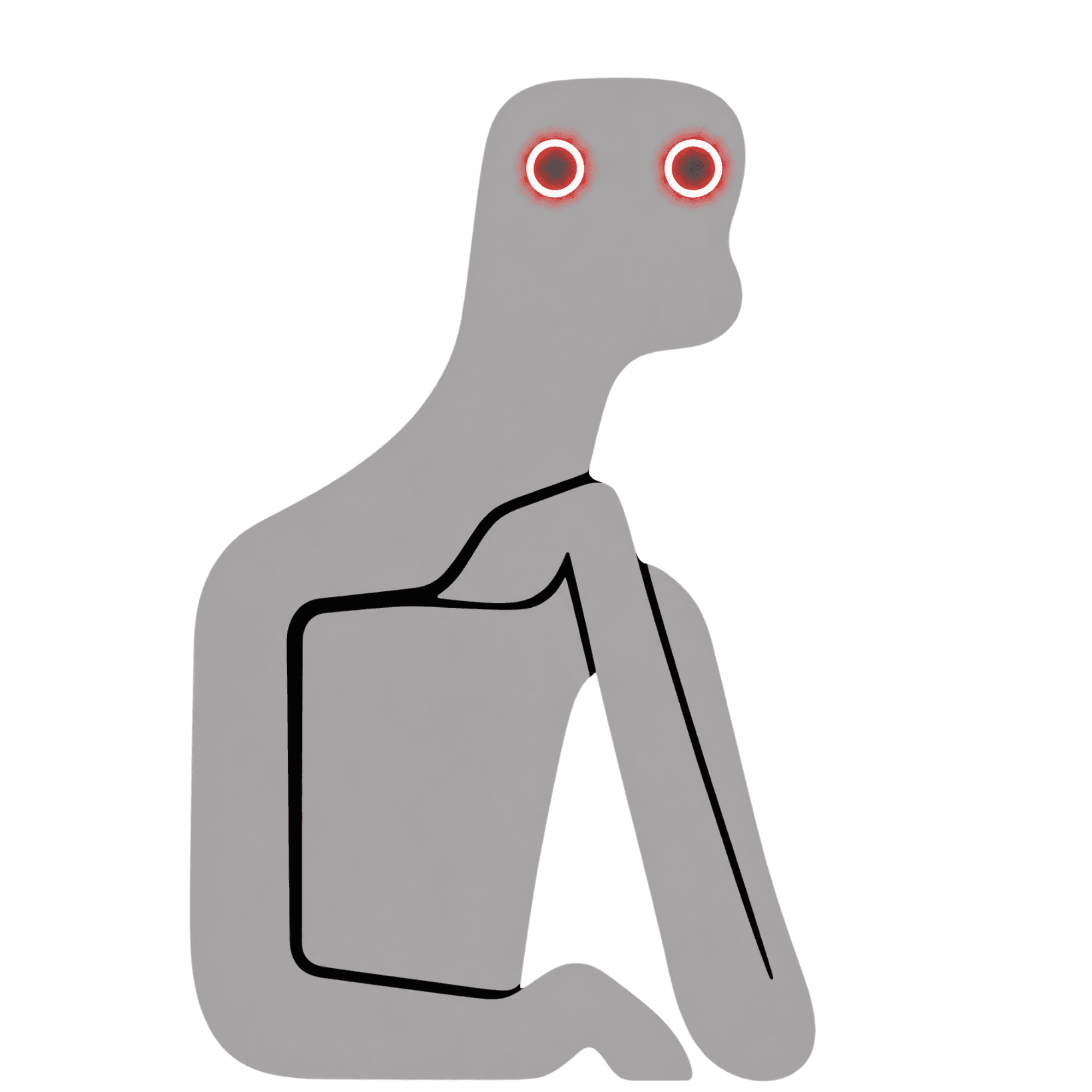
Contemplators is a collection of figures that contemplate. Each one looks from a different angle. There is no narrative. There is no action. What changes is not what happens, but where it is viewed from.
Contemplators is a collection of figures that contemplate. Each one looks from a different angle. There is no narrative. There is no action. What changes is not what happens, but where it is viewed from.
They don't come from a monastery. They come from the manifest. Every Contemplator is one of us: someone who is dedicated to the digital world, who puts in hours and years, and who has made watching their craft, their leisure, and their way of learning. Watching is not their rest. It is their workday.
They don't come from a monastery. They come from the manifest. Every Contemplator is one of us: someone who is dedicated to the digital world, who puts in hours and years, and who has made watching their craft, their leisure, and their way of learning. Watching is not their rest. It is their workday.
Each Contemplator is defined by five things: an obsession they pursue, a blind spot they do not see, a gesture they repeat, something they feed on, and a crack through which they break. That is what makes them look the way they look. And also what prevents them from seeing the rest.
Each Contemplator is defined by five things: an obsession they pursue, a blind spot they do not see, a gesture they repeat, something they feed on, and a crack through which they break. That is what makes them look the way they look. And also what prevents them from seeing the rest.
The blind spot is not a defect. It is the engine. No one looks from everywhere: one looks from where one cannot see.
The blind spot is not a defect. It is the engine. No one looks from everywhere: one looks from where one cannot see.
Five axes with five values each yield 3,125 possible minds. The collection progresses across that map edition by edition, and no combination is ever repeated.
Five axes with five values each yield 3,125 possible minds. The collection progresses across that map edition by edition, and no combination is ever repeated.
The first edition is Original. The second, Chlorophyllic: chlorophyll is what converts light into oxygen, the plant world looks without eyes and breathes for us since before there was anyone watching. There will be more.
The first edition is Original. The second, Chlorophyllic: chlorophyll is what converts light into oxygen, the plant world looks without eyes and breathes for us since before there was anyone watching. There will be more.
No one sees the whole picture. No one sees the same as another.
No one sees the whole picture. No one sees the same as another.
That's why they are collected: you see what the other person doesn't see, a Contemplator sees what you don't see.
That's why they are collected: you see what the other person doesn't see, a Contemplator sees what you don't see.
Contemplating is no longer about withdrawing. It is what we dedicate our time and our lives to. Hours of screen time, years of scrolling, an attention span that works without stopping. These figures are exactly that.
Contemplating is no longer about withdrawing. It is what we dedicate our time and our lives to. Hours of screen time, years of scrolling, an attention span that works without stopping. These figures are exactly that.
